Advances in Microfluidic Channel Surface Modification for Improved Biocompatibility
Surface Engineering Innovations for Next Generation Organ on chip Systems
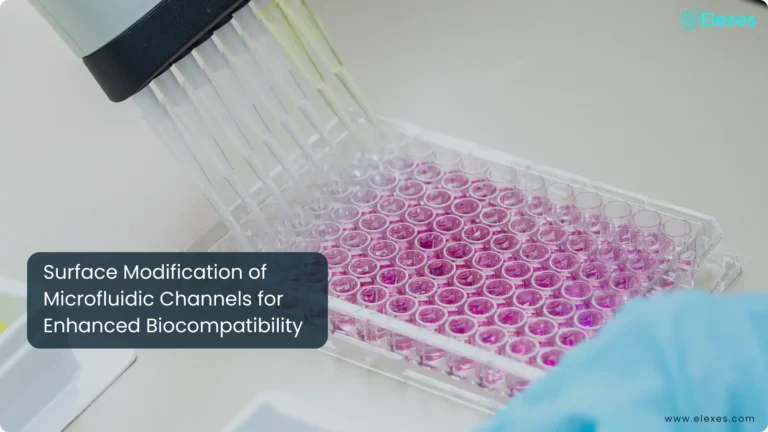
The rapid growth of microfluidic technologies has reshaped how researchers model human physiology and run high precision diagnostics. The rapid development of organ-on-chip platforms, point of care devices, and lab-on-chip systems has made biocompatibility under relevant physiological and operational conditions a critical design consideration. One of the biggest obstacles is still the interaction of the living samples with the polymer channels, especially the ones made of Polydimethylsiloxane (PDMS). In addition to surface interactions, PDMS is known to absorb hydrophobic small molecules and may leach uncross-linked oligomers, both of which can influence assay outcomes and long-term cell behavior.
This article reviews the latest surface modification strategies that enhance wettability, lower fouling, and stabilize long term hydrophilicity in microfluidic and organ on chip systems.
Hydrophobicity, Surface Energy, and Protein Adsorption
PDMS is widely used due to its optical clarity, elasticity, and simple fabrication, but it has a highly hydrophobic surface with a typical water contact angle near 110 degrees. Studies show that hydrophobic microfluidic channels promote non specific protein adsorption, increased fouling, and unpredictable protein adsorption profiles, which in turn influence cell attachment, signaling, and assay reproducibility in organ-on-chip systems.
Higher surface energy (more hydrophilic channels) supports:
⦿ Support reduced non-specific protein and platelet adsorption
⦿ Improve capillary-driven filling and flow uniformity
⦿ Reduce air bubble entrapment during device priming
⦿ Contribute to more stable and reproducible biological performance over time
Quantitative measures such as water contact angle (WCA), surface chemistry characterization, and—where applicable—capillary flow initiation time remain key indicators of surface modification performance.
Key Surface Modification Methods for PDMS Microfluidic and Organ on chip Devices

Plasma Treatment for Rapid Hydrophilicity
Plasma activation introduces hydroxyl groups onto PDMS surfaces, significantly lowering WCA and enabling faster fluid filling. Research confirms that oxygen plasma treated PDMS can drop WCA below 20 to 30 degrees immediately after treatment. However, hydrophobic recovery—driven by polymer chain reorientation and migration of low-molecular-weight species—typically occurs over hours to days, depending on storage and environmental conditions.
Silanization for Functionalized Surfaces
Silanization allows the attachment of amino, epoxy, or methacrylate silanes after plasma activation. This enables covalent bonding of biomolecules or antifouling chemistries. It is widely used in microfluidic biosensors and selected organ-on-chip epithelial or endothelial models, particularly where controlled surface chemistry and covalent biomolecule attachment are required.
PEGylation for Antifouling and Long Term Stability
PEG based coatings have shown exceptional protein resistance. Representative studies have demonstrated that bulk or surface PEG/PEO modification of PDMS (e.g., ~2–3% PEO incorporation) can reduce WCA to below ~50 degrees and significantly decrease protein and platelet adsorption for several days.
Emerging Coatings for Next Generation Organ on chip Systems
Recent studies point to zwitterionic polymers, graft polymerization, and hydrogel coatings as techniques that can further inhibit fouling even under dynamic flow. The use of these technologies is growing particularly in kidney on-chip, lung on-chip, and gut on-chip models where long-term cell viability and functional stability are strongly influenced by surface fouling, flow conditions, and biochemical signaling.
Quantitative Benchmarks for Improved Wettability
A compendium of studies performed on different techniques for modifying PDMS showed that there were definite improvements that could be measured:
⦿ Untreated PDMS: ~110 degree WCA
⦿ Plasma treated PDMS: 20 to 40 degrees (short duration)
⦿ PEG modified surfaces: 40 to 60 degrees
⦿ Zwitterionic coatings: frequently reported in the ~20–40 degree range, depending on polymer chemistry and grafting density
For microfluidic diagnostics and organ on chip applications, maintaining WCA values below approximately 60 degrees is commonly associated in the literature with reduced fouling, more consistent cell responses, and improved short- to mid-term device performance, though it is not a standalone predictor of biocompatibility.
Relevance for Medical Device Development and Regulatory Readiness
Surface modification has become a primary factor for microfluidic and organ-on-chip platforms in the case of preclinical testing and point of care use. Elexes supports developers by ensuring compliance with:
⦿ Biocompatibility requirements
⦿ Quantified surface characterization data to support biological risk assessment
⦿ Documentation of material modifications
⦿ Global regulatory submission readiness
Reliable surface engineering directly improves device safety, consistency, and market acceptance.
If you would like to explore how Elexes can guide your microfluidic or biosensor device through regulatory approval, contact our team today.