
FDA Medical Device Recall Highlights the Importance of Packaging Integrity and Post-Market Surveillance
A recent FDA medical device recall involving ophthalmic surgical procedure packs has highlighted the critical role of packaging integrity, particularly where potentially incomplete seals may compromise sterility. Even for products already in clinical use, failures related to packaging and sterility can trigger high-risk regulatory actions and significant operational impact.
This recall serves as an important reminder for medical device manufacturers to continuously evaluate their quality systems, particularly around packaging for medical devices, recall readiness, and post-market surveillance processes.
Understanding FDA Medical Device Recalls
A recall of an FDA medical device occurs when the device is pulled off the market or fixed because it may violate FDA regulatory requirements or pose a potential risk to patient safety. The recalls can be either initiated by the manufacturer or requested by the FDA, depending on the risk that has been ascertained.
FDA recalls are categorized into different levels, commonly referred to as FDA class recalls, based on the severity of potential harm.
FDA Class Recalls and Regulatory Significance
FDA Class I Medical Device Recalls
An FDA Class I medical device recall represents the most serious category of recall. Recalls involving potential sterility compromise are commonly evaluated under this classification due to the associated patient safety risks. This means there is a reasonable probability that the device’s use could result in serious health consequences or even death.
Class I recalls often involve issues such as:
⦿ Loss of sterility
⦿ Compromised packaging
⦿ Contamination risks
⦿ Critical performance failures
Regulatory bodies pay great attention to these recalls, and they require prompt action from both manufacturers and healthcare facilities.
Why Packaging for Medical Devices Is a Critical Compliance Area

Packaging for medical devices is essential to maintaining sterility, integrity, and usability throughout the product life cycle. The integrity of a package can be affected by multiple factors, including incomplete seals, damaged pouches, or incompatible packaging materials, and these can all lead to sterility loss and infection risks for patients.
On the other hand, regulators often look at packaging issues as an indication of weakness in the following areas:
⦿ Packaging validation
⦿ Process controls
⦿ Supplier qualification
⦿ Environmental monitoring
⦿ Ongoing quality oversight
All of the above means that if packaging integrity is compromised, patient safety is also compromised, and hence related failures commonly lead to FDA Class I recalls.
Recall Procedure for Medical Devices: Key Expectations
The recall procedure for medical devices is a structured regulatory process that requires timely and documented actions. Typical expectations include:
⦿Fast evaluation of affected products and lot tracing
⦿ Isolation or disposal of affected stock
⦿ Informing customers, distributors, and hospitals
⦿ Alerting of regulatory bodies
⦿ Determination of cause and execution of corrective and preventive actions (CAPA)
It is expected that manufacturers will prove their control, openness, and impact throughout the recall process.
The Role of Post-Market Surveillance in Recall Prevention
Post-market surveillance plays a critical role in detecting, trending, and escalating quality issues in medical devices, often serving as an early indicator of systemic risks that may lead to regulatory action. This enables manufacturing and quality teams to investigate root causes, implement interim risk controls, and develop permanent corrective and preventive actions.
Strong post-market surveillance programs typically include:
⦿ Complaint handling and trending
⦿ Vigilance reporting
⦿ Risk management updates
⦿ Periodic quality reviews
⦿ Continuous feedback into design and manufacturing processes
In many recall cases, post-market surveillance data provides the first indication of a systemic quality issue.
Key Lessons for Medical Device Manufacturers
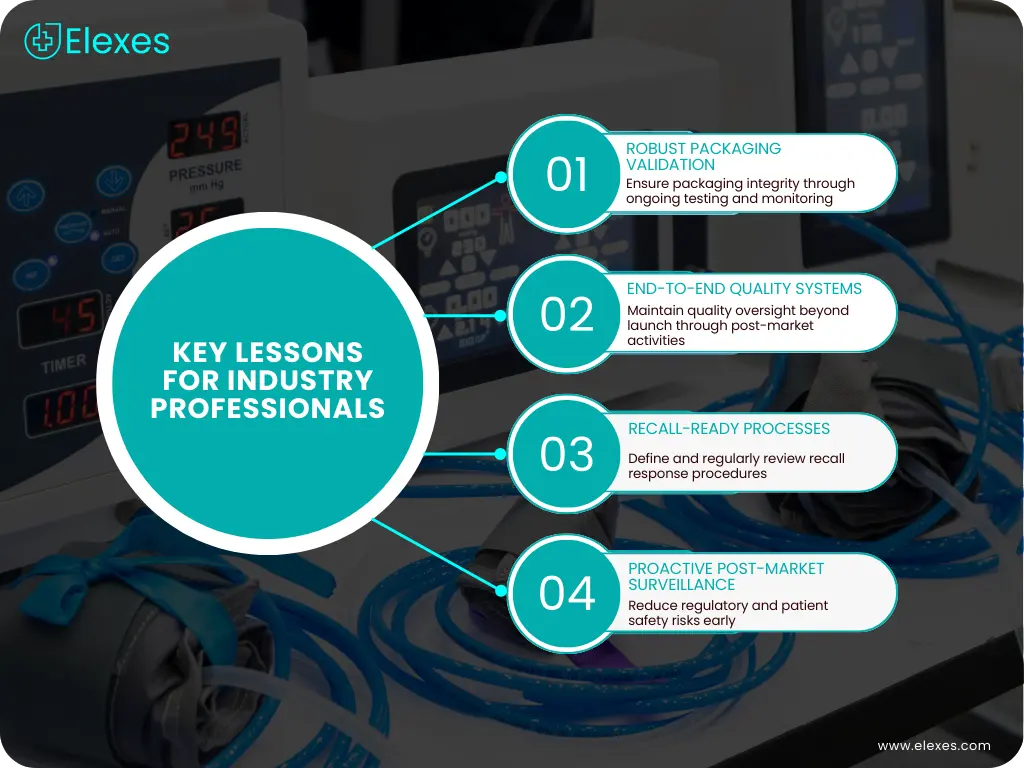
This FDA recall reinforces several critical regulatory and quality lessons:
⦿ Packaging validation and integrity testing must be robust and continuously monitored
⦿ Quality systems must extend beyond product launch into routine post-market oversight
⦿ Recall readiness and response procedures should be clearly defined and regularly reviewed
⦿ Proactive post-market surveillance can significantly reduce regulatory and patient safety risks
Preventive quality controls require sustained investment but are essential for reducing the likelihood of high-impact regulatory actions.
Conclusion
FDA medical device recalls, particularly those involving potential sterility risks, demonstrate the extent to which packaging integrity, recall procedures, and post-market surveillance are interrelated. It is not only a regulatory expectation but also a fundamental responsibility towards patient safety to enhance these areas.
By proactively addressing packaging risks and maintaining strong post-market surveillance systems, manufacturers can reduce the likelihood of recalls and ensure long-term compliance.
Click here to read the full FDA recall announcement.
FAQs
What is an FDA medical device recall?
An FDA medical device recall occurs when a device is removed from use or corrected because it may violate regulatory requirements or pose a risk to patient safety.
What are FDA class recalls?
The FDA class recalls categorize recalls based on risk severity. Class I recalls involve the highest risk, where use of the device may cause serious injury or death, while Class II and Class III recalls involve lower levels of risk.
What is the recall procedure for medical devices?
The recall procedure for medical devices typically includes identifying affected products, quarantining inventory, notifying customers and regulators, conducting root cause analysis, and implementing corrective and preventive actions.
How does post-market surveillance help prevent recalls?
Post-market surveillance for medical devices helps detect trends, complaints, and quality issues early, allowing manufacturers to address potential risks before they escalate into regulatory recalls.