
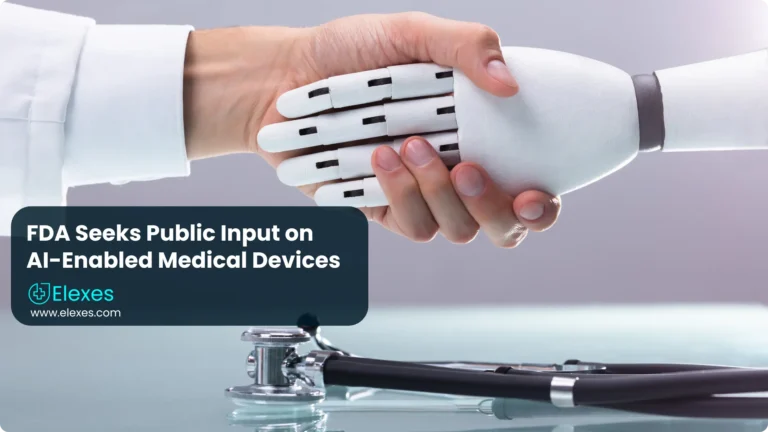
FDA Seeks Input on Evaluating AI-Enabled Medical Devices
Introduction
The U.S. Food and Drug Administration (FDA) is now publicly working on various approaches to evaluate the real clinical performance of medical devices based on Artificial Intelligence. This decision shows the FDA’s commitment to establishing robust methods through which AI can be utilized in the healthcare industry safely, efficiently, and dependably. The notice for public comment, “Measuring and Evaluating Artificial Intelligence-Enabled Medical Device Performance in the Real World”, is one of the FDA’s initiatives directed at reinforcing the postmarketing surveillance of AI/ML-based medical devices. The FDA is looking to get feedback from the protective groups of the industry, medical practitioners, patients, and researchers through this open consultation on how to measure and monitor AI’s performance beyond that of the pre-market evaluations.
Importance of the Initiative
AI and machine learning models are constantly changing and improving with the help of new data, and this may also result in a change in their performance over time, which is referred to as model drift. The conventional methods of validation that primarily rely on testing before marketing and approving the device may not be able to detect these changes properly after the device has been deployed in the field under real-world conditions.
In its new endeavor, the FDA plans to systematically investigate the possibilities of monitoring, evaluating, and ensuring reliable AI-based medical devices’ performance through their life cycle as one of the main strategies in tackling this problem. Stakeholder input will be crucial for the agency in pinpointing the most important indicators, methods, and support systems required for the successful monitoring of performance in real-world scenarios.
This is a very important step towards a more flexible regulatory model that provides the necessary balance between innovation and patient safety, and it simultaneously allows quicker adoption of new AI technologies in the field of medicine.
Key Areas of Focus
The FDA has identified several priority areas where it seeks stakeholder feedback:
⦿ Performance Metrics: Finding which metrics are the best to represent and give information about the accuracy, reliability, and utility of the device in real-life use.
⦿ Evaluation Methods: Establishing consistent methods for collecting and analyzing real-world data.
⦿ Data Quality and Sources: Identifying reliable sources of real-world evidence and ensuring data integrity.
⦿ Triggers for Reassessment: Defining when and how device performance should be reevaluated.
⦿ Human Oversight: Understanding how clinicians and patients interact with AI systems in practice.
⦿ Implementation Challenges: Bringing to light the obstacles and, at the same time, suggesting the ways for continuous AI performance monitoring to happen.
The FDA has informed that the stakeholders are encouraged to submit their comments through the public docket FDA-2025-N-4203 on Regulations.gov by December 1, 2025.
Broader Regulatory Context
This call for input builds upon the FDA’s earlier work under the Digital Health Center of Excellence (DHCoE) and the agency’s evolving framework for AI/ML-based Software as a Medical Device (SaMD). Other initiatives like the Accreditation Scheme for Conformity Assessment (ASCA) also play their part. This aims to make conformity evaluations easier via accredited testing laboratories. All these initiatives not only support the FDA’s larger goal of making regulations that are easy to understand, consistent, and predictable, but also encourage innovation by ensuring patient safety.
For manufacturers developing AI-enabled medical devices, understanding these evolving expectations is essential. Aligning product design and postmarket monitoring strategies with regulatory best practices can simplify pathways for FDA submissions and global approvals, such as CE Marking or ISO 13485 compliance.
Moving Forward
The FDA’s objective of inviting varied viewpoints is to build a practical and scalable AI performance evaluation framework that would reflect the real-world difficulties, increase transparency, and bring the public to trust digital health innovations. The feedback gathered from this initiative will be directly considered in the future guidance documents or policy recommendations regarding the life management of AI devices. This cooperation is a clear signal of the FDA’s readiness to bring about changes in its regulatory approaches in accordance with the new cutting-edge technologies that are transforming the healthcare industry scenario. AI is having a significant impact on diagnostic procedures, treatment planning, and patient monitoring; therefore, it would be necessary to outline very clear and well-documented evaluation techniques in order to keep the medical device industry innovative and, at the same time, accountable.
To read more about the news, you can visit the official announcement here.