When should you submit a new 510(k)?
For devices subject to 510(k) requirements, a new submission is generally required when a change could significantly affect safety or effectiveness, or constitutes a major change in intended use, unless an applicable exception applies.
Under FDA requirements, modifications to an existing device may require a new 510(k) when they could significantly affect its safety or effectiveness, or constitute a major change or modification in its intended use. A premarket notification (510(k) is usually needed when the marketed 510(k) cleared medical device undergoes significant changes or modifications. As per the FDA 510(k) requirements, these major changes can involve modifications to the design, components, manufacturing method, or intended use.
Why do changes happen in medical devices?
Medical device changes occur for many reasons, including technological advancements, regulatory updates, and performance optimisation. Let’s explain these one by one.
#1 Technological Breakthroughs:
Innovation is nonstop in the healthcare and medical device industry. As new technologies emerge, medical devices are updated or redesigned to be smarter, safer, and more effective, hence introducing the change in the existing product.
#2 Regulatory Demands:
Regulations always change to ensure patient safety and medical device efficacy. Medical device manufacturing companies need to change their device to adapt and meet these new standards, which often leads to modifications or redesigns.
#3 Improved Performance:
The ultimate goal is better patient care. Feedback from the field can prompt changes in the medical device design, functionality, or usability to enhance treatment outcomes.
In conclusion, change is constant in the medical device world, and it is driven by the need to stay ahead in technology, comply with evolving regulations, and deliver the best possible care.
What Procedures Are in Place for Changes in Medical Devices?
Now that we know that changes in the medical device industry are constant, it is essential to understand the processes and steps that are in place to manage these changes in medical devices.
Luckily, changes to medical devices are carefully managed through a series of procedures to ensure safety, effectiveness, and regulatory compliance.
Here’s an overview of the key steps (along with corresponding procedures) involved in change management for medical devices:
Step # 1 – Change Control:
Assessment: Any updates to the design, materials, manufacturing, or labeling need a thorough review to ensure they don’t affect the safety, performance, or regulatory status of the medical device.
Approval: A change is first reviewed and assessed through the change request process. After completion of the assessment, the change request must be approved by different stakeholders from regulatory affairs, quality assurance and engineering team to ensure that all the potential risks are considered.
Step # 2 – Development and Validation and Verification:
Testing: Laboratory testing, bench testing, clinical evaluations and software validations are a few examples of testing which needs to be done in order to verify that the modified device meets the standards of safety and performance.
Documentation: In order to demonstrate compliance with the regulatory standards, proper documentation of all test results, along with updated risk assessments and design documents must be done. This documentation must be reviewed and approved through Engineering Change Controls (ECOs).

Step # 3 – Regulatory Documentation and Submission:
Changes Not Requiring a New 510(k): In cases where, according to the relevant FDA guidance, the determination is made that a new 510(k) is not required, the changes, risk assessment for the change, and any associated verification or validation information should be documented in the quality management system of the manufacturer.
Changes Requiring a New 510(k): In cases where the modification might have an impact on the safety and efficacy of the medical device or where there is a major change to the intended use of the device, a new 510(k) might be necessary. The appropriate path for submission should be evaluated by the manufacturer.
Step #4 – Implementation and Training:
Production Update: After validation and verification, regulatory submission of internal documentation, the changes can be introduced in the field.
Training: In case the change affects how the device is used, it is the manufacturer’s responsibility to ensure that end-users of the product, such as healthcare professionals, receive proper training on the updated device.
Step # 5 – Post-Market Surveillance:
Monitoring: After implementation is carried out successfully, the modified device is monitored through postmarket surveillance to ensure that it performs as expected in real-world settings.
Feedback Loop: Any issues identified during postmarket surveillance can trigger further changes, creating a continuous improvement loop. The change management procedures ensure that changes to medical devices are carefully controlled, minimizing risks and ensuring that the devices continue to meet regulatory and safety standards while delivering effective patient care.
What do we mean by significant changes?
A new 510(k) application would normally be needed for changes to an already approved device, if such a change can significantly impact the device’s safety or efficacy or involve a significant change or modification in its intended use under 21 CFR 807.81(a)(3).
Manufacturers should analyze changes related to software, materials, design, manufacturing and labeling using FDA guidance. Such analysis will take into account the type of change, risk associated with it, and impact on performance.
A non-significant change does not always necessitate a new 510(k), but it needs to be evaluated and documented. Minor changes such as correcting a bug in software should also be evaluated before considering it to be non-significant.
FDA Guidelines to Determine When Modification Requires a New 510(k) Medical Device Submission
FDA provides guidance to help manufacturers determine whether a change to an existing device requires a new 510(k).
What change areas should you assess when deciding whether to submit a new 510(k)?
| Change area | Assessment focus |
|---|---|
| Labeling | Changes to intended use, indications, instructions, or warnings, and their potential impact on safety or effectiveness. |
| Materials | Type of material change and potential impact on biocompatibility, safety, effectiveness, or performance. |
| Design | Type of design change and potential impact on safety, effectiveness, or performance. |
| Manufacturing or process | Type of change and potential impact on device specifications, safety, effectiveness, or performance. |
| Software or firmware | Potential impact on functionality, performance, risk controls, or the introduction of new or modified risks. |
Document the change and the rationale for the regulatory decision.

Use the guidance that applies to the change:
● Deciding When to Submit a 510(k) for a Change to an Existing Device
● Deciding When to Submit a 510(k) for a Software Change to an Existing Device
Assess and document the modification, associated risks, verification and validation results, and the rationale for whether a new 510(k) is required.
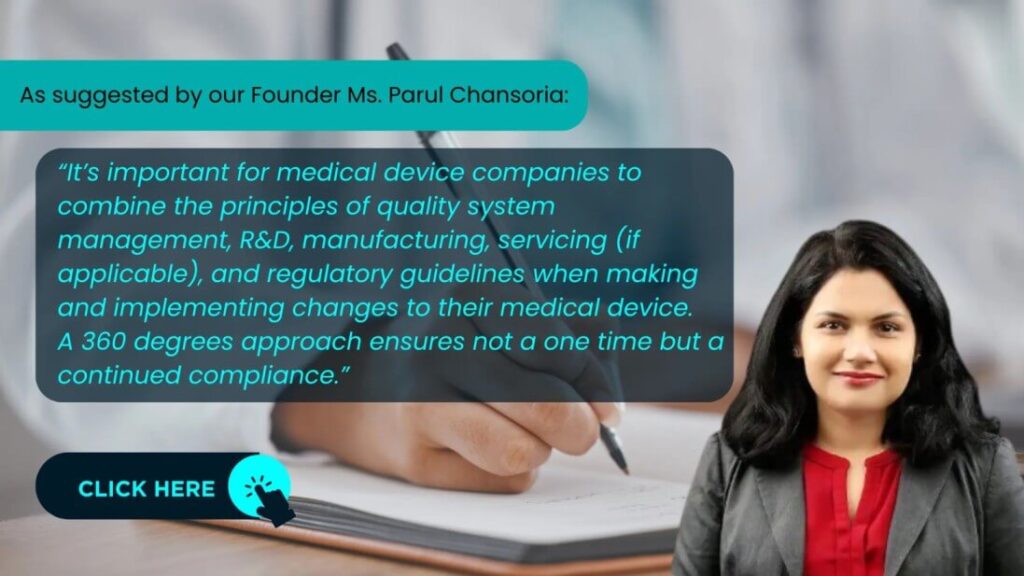
After knowing all this, one thing that is clear here is that having a proper change assessment process in place can help you reduce the risk of failing in regulatory compliance requirements and ensure you do not get trapped in the maze of expensive recalls.

FAQs
-
Do labeling changes require a new 510(k)?
No. A new 510(k) will be required where the modification will have significant impact on the safety or effectiveness of the device, or it is a substantial change to the intended use of the device. Manufacturers must conduct an assessment of the modification according to the relevant FDA guidelines.
-
Do software updates require a new 510(k)?
Not necessarily. Software changes should be assessed for their impact on device functionality, performance, risk controls, and safety or effectiveness using FDA's software modifications guidance.
-
Can material changes trigger a new 510(k)?
Yes. Material changes might require a new 510(k) application if the changes could have a significant impact on the safety or effectiveness of the device.
-
What documentation is needed when a new 510(k) is not required?
It is advised that the manufacturers should keep documentation of the change assessment, which includes the description of the modification, risk analysis, and verification/validation data along with the reasoning behind the regulatory decision.
-
Can a Special 510(k) be used for device modifications?
Yes, when the modification requires a new 510(k) and meets the eligibility criteria for the Special 510(k) pathway. Eligibility depends on factors such as the submitting manufacturer, the evaluation methods and whether the results can be reviewed in a summary or risk-analysis format.
Need Help Determining Whether Your Device Change Requires a New 510(k)?
Elexes can assist with device modification assessments, regulatory strategy and 510(k) submission preparation.
Need help deciding whether a device change requires a new 510(k)? Talk to our 510(k) submission team.