

UK Clinical Trial Reforms Signal a Turning Point for Medical Device Innovation
Why the New UK Clinical Trials Framework Matters Beyond Pharma
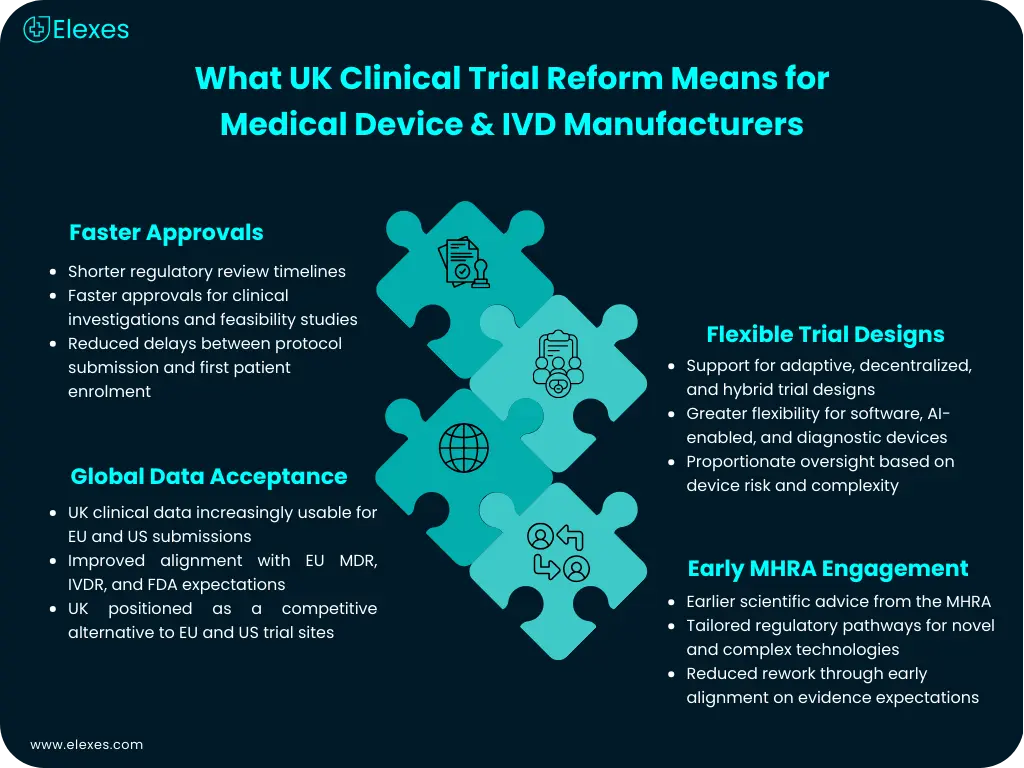
The UK government has announced a major reform to its clinical trials framework, aimed at faster approvals, streamlined assessments, and more agile regulation. While the reforms are primarily aimed at medicines, the broader regulatory direction has clear implications for medical device and IVD clinical investigations. These changes may directly affect how medical device and IVD manufacturers plan clinical studies, generate evidence, and design global trials.
Clinical studies are increasingly needed to support regulatory approvals, post-market requirements, and combination or diagnostics-driven therapies in the medical device space. Shorter review timelines and a more flexible regulatory approach can help reduce time to market, while maintaining patient safety and regulatory oversight.
Regulatory Agility as a Signal for Innovation-Friendly Environments
The regulatory changes demonstrate the UK's determination to be at the forefront of Clinical research innovation. The focus on faster study start-up, proportionate oversight, and closer integration with healthcare settings signals a shift toward more practical and modern clinical approaches.
The direction of travel suggests greater openness to decentralized studies, digital endpoints, and data-driven evidence for complex devices, AI-enabled software, and companion diagnostics. It also points to a shift in how clinical evidence is assessed, with more emphasis on data quality, relevance, and real-world use rather than rigid, one-size-fits-all trial models.
Implications for Global Sponsors Choosing Study Locations

The UK is increasingly positioning itself as a competitive option alongside the EU and the US for medical device clinical investigations. Quick approvals and better clinical trial participation frameworks are decreasing operational friction while preserving regulatory credibility.
From a strategic standpoint, UK data might have a more significant impact in supporting submissions in different jurisdictions, especially if they are in line with the EU MDR/IVDR or the FDA's expectations. This makes the UK an attractive location for early feasibility studies and as a potential anchor site for multinational device trials.
MHRA’s Engagement Trend: Early Advice and Tailored Pathways
One of the key shifts under this reform is the stronger emphasis on early engagement with the MHRA (Medicines and Healthcare products Regulatory Agency). The regulator is willing to offer scientific advice, give proportionate oversight, and create custom pathways especially for innovative technologies.
This trend of engagement gives manufacturers an opportunity to synchronize their clinical strategies earlier, lessen the risk of redesign, and integrate regulatory expectations into development planning earlier under the evolving UK medical device regulatory framework.
What RAQA Teams Must Watch Closely
Regulatory and quality teams should monitor several emerging considerations:
⦿ Shifts in clinical evidence expectations for devices and diagnostics
⦿ Acceptance of novel trial designs and digital data sources
⦿ Use of in-silico tools and modeling as supportive evidence
⦿ Alignment of UK clinical data with global regulatory requirements for medical devices
Early awareness and proactive planning will be key to leveraging the new framework effectively.
How Elexes Can Support
Elexes supports medical device and IVD manufacturers in translating regulatory change into actionable clinical and regulatory strategies from MHRA engagement planning and clinical evidence road-mapping to alignment with CE Marking, FDA submissions, and ISO 13485 requirements.
Planning a clinical investigation or global evidence strategy?
FAQs
Does the new UK clinical trials framework apply to medical devices?
Yes. While the reforms were introduced for medicines, they also influence how clinical investigations for medical devices and IVDs are planned and reviewed when clinical evidence is required
Will UK clinical data be accepted outside the UK?
UK clinical data can support EU and US submissions when designed to meet international standards and aligned with FDA and MDR/IVDR expectations.
How does MHRA engagement change under the new framework?
MHRA is still putting significant emphasis on the early scientific advice and proportionate oversight, which in turn enables better alignment of the clinical strategy with the regulatory expectations.
Are decentralized or digital trials supported?
Yes, the reforms imply that the regulatory authorities are willing to try out different innovative trial models, for example, digital tools and adaptive approaches, but they are still keeping data integrity and patient safety as their main priorities.
What should RAQA teams do now?
Teams should reassess clinical evidence strategies, monitor MHRA guidance updates, and ensure trial designs align with evolving UK and global regulatory expectations.