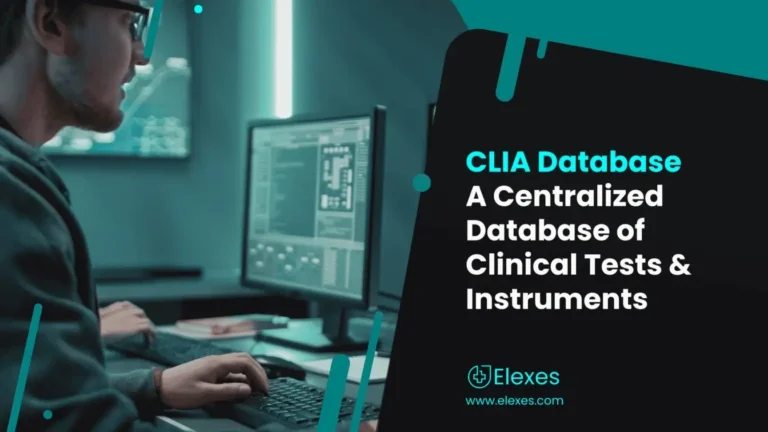
CLIA Database: Types of CLIA Certificates and Clinical Tests
Diagnosis plays a vital role in curing a disease. If the diagnosis itself is wrong, the disease cannot be treated. Osteosarcoma, a dangerous but common form of bone cancer which mostly affects the population of children and young adults (15 – 24), is often being misdiagnosed as growing pains or muscle strains, according to the Bone Cancer Research Trust (BCRT). Due to improved awareness about the importance of diagnosis, Clinical Laboratories been gaining more interest now than ever. However, Clinical Laboratories in the States were reported with the wrong diagnosis and poor quality of services, prior to 1988.
The US Congress conducted several investigations of testing performed in the Physician Office Laboratories (POLs) and other labs. One major initiate was –The Clinical Laboratory Improvement Amendments (CLIA) which was passed by the Congress in 1988 to set standards designed for improving the quality in all laboratory testing which also includes specifications for quality control and assurance, patient test management, personnel and proficiency testing.
Approximately 260,000 laboratory entities are covered under CLIA. Labs and POLs operating in New York or Washington are exempt from CLIA. The CLIA database contains information about commercially marketed in-vitro systems and tests. The database is updated weekly and has been maintained by the FDA since January 31, 2000. Prior to 2000, the CDC (Center for Diseases Control and Prevention) used to maintain the database.
Types of CLIA certificates:

◉ Certificate of Waiver (COW) – Issued for performing only waived tests.
◉ Certificate for Provider who Performed Microscopy (PPM) procedures –Issued when a microscopy procedure (among a list of procedures included under this certificate) is to be performed on a patient.
◉ Certificate of Registration – Issued to the laboratory to conduct nonwaived testing until the laboratory is inspected to determine its compliance with the CLIA regulations.
◉ Certificate of Compliance (COC) – It is issued once the State Department of Health conducts the inspection and determines that the laboratory is compliant with all applicable CLIA requirements.
◉ Certificate of Accreditation (COA) – It is issued on the basis of the laboratory’s competence assessment by an accreditation organization approved by CMS.
NOTE: All types of certificates are valid for 2 years.
Waived test
Simple laboratory examinations and procedures that have an insignificant risk of an erroneous result. Few of the waived tests include: Blood Glucose monitoring, Platelet Count, and Urine qualitative dipstick analysis.
Non-Waived test
It is a moderate and/or high complexity testing. Non-waived tests include: Hematology and Toxicology
A non-waived is further categorized into PPM and Moderate/High Complexity. PPM tests are different from moderate or high complexity tests. A test or device is classified as moderate or high, based on 7 criteria. The decision for classification of device or test is based on a ‘scorecard’. Each criterion can be marked as 1, 2 or 3 based on the level of complexity (3 being the highest and 1 being least complex). All the scores are then added to get an aggregate score. If the total score is 12 or less, it is considered as a moderate test. If the total score is greater than 12 it is considered as high complexity. The 7 criteria for classification are as follows:
To get a CLIA certification the Sponsor needs to fill CMS116 form and submit it to the respective State Agency. You can also contact professional service firms like Elexes Medical Consulting to assist in submitting for assisting in the certification process.
CLIA Database Usage Checklist
FAQs
-
What is the FDA CLIA database and who uses it?
The FDA CLIA database lists clinical tests and instruments categorized by complexity; labs, manufacturers, and regulators use it to verify test details, intended use, and laboratory eligibility.
-
How can I search the CLIA database for my IVD test system or instrument?
Use the FDA CLIA online search tool and enter your test name, manufacturer, or instrument model to find listings for your IVD test system or device.
-
What do the CLIA complexity categories mean for manufacturers of IVDs?
They define test complexity (waived, moderate, high), which affects lab requirements and regulatory expectations.
-
How often is the CLIA database updated and why it matters?
The database is updated regularly to reflect current test listings, ensuring accurate compliance and lab placement, which is critical for regulatory adherence and safe test use.
-
How can I use CLIA database information to support my 510(k) or regulatory submission?
You can reference official CLIA classifications to demonstrate test complexity and support regulatory submissions or claims.