FDA Adverse Event Reporting Services
FDA adverse event reporting demands fast, defensible decisions, accurate documentation, and timely submissions. Elexes helps medical device companies assess reportability, strengthen complaint handling workflows, and support MDR obligations under 21 CFR Part 803. Explore how expert regulatory guidance can reduce compliance risk, improve post-market oversight, and keep your reporting process inspection-ready.

Our FDA Adverse Event Reporting Services
Specialized support for reportability decisions, complaint governance, post-market oversight, and FDA response management.
Reportability Support
Structured assessment of complaints, malfunctions, and adverse events against FDA MDR criteria under 21 CFR Part 803, with documented rationale and submission support when reporting is required.
Complaint Governance
Ongoing oversight of complaint intake, classification, investigation quality, closure documentation, and linkage to post-market surveillance activities to strengthen compliance and inspection readiness.
PMS Support
Post-market surveillance support that consolidates complaint data, trend analysis, and safety signals into actionable regulatory outputs that support ongoing FDA compliance.
Agency Response
Expert support for responding to FDA inquiries, deficiency letters, and regulatory actions related to adverse event reporting, complaint handling, or post-market obligations.
Virtual RAQA Operations
Embedded regulatory and quality support that manages day-to-day reporting workflows, documentation control, governance meetings, and escalation pathways without adding full-time headcount.
Compliance Training
Targeted regulatory and compliance training to help internal teams understand adverse event reporting triggers, documentation standards, and FDA expectations for post-market processes.
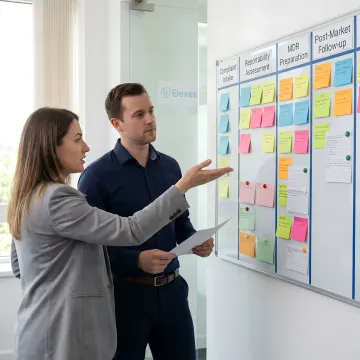
Our FDA Reporting Support Process
Review the Event Record
We examine the complaint, malfunction, or adverse event details, supporting evidence, device history, and investigation status to establish a complete factual record before any reporting decision is made.
Assess FDA Reportability Criteria
Our consultants evaluate the event against applicable FDA MDR requirements under 21 CFR Part 803, determining whether the issue meets thresholds for death, serious injury, or malfunction reporting.
Document the Regulatory Rationale
We prepare a clear, defensible assessment that records the decision logic, supporting references, and required follow-up actions, helping your team maintain consistency across future complaint evaluations.
Prepare and Submit Reports
If reporting is required, we support accurate MDR preparation, quality review, and submission-ready documentation so deadlines are met and the filing aligns with FDA expectations.
Strengthen Ongoing Governance
Beyond the immediate event, we help improve complaint handling, trending, PMS integration, and internal workflows so your post-market system stays audit-ready and better equipped for future cases.
Trusted Regulatory Support
Success Stories
Supporting medical device companies with defensible reporting decisions and stronger post-market compliance systems.
“Excellent communication, diligent work. There is a strong quality background and QMS norms expertise.”
Samip Shah
“Kudos to the Elexes team! They’re always proactive and have provided invaluable support to us with import, labels, and registrations.”
Philip McFerran
“Accurate and amazing! Their regulatory-compliant fact sheets for multiple products enabled us to sell domestically and internationally without issues. Their work had an impressive turnaround time.”
Elizabeth W
“Highly recommended! They excelled at regulatory projects, and document control, and grasped our product’s nuances quickly.”
Michal Depa
The Elexes Difference
Why Choose Elexes?
Elexes combines regulatory depth, post-market expertise, and flexible support models for complex FDA reporting needs.
Deep Expertise
50+ years of collective experience across FDA, ISO, and global medical device compliance.
End-to-End Support
From reportability review to post-market governance, Elexes supports the full compliance lifecycle.
Proven Results
250+ successful projects and a 90% audit clearance rate reflect disciplined execution.
Flexible Delivery
Choose project-based, part-time, or embedded RAQA support without increasing internal headcount.
Meet The Elexes Team
Experienced consultants supporting complex regulatory obligations.
Elexes Medical Consulting Pvt. Ltd. is a trusted regulatory and quality consulting partner for medical device companies navigating complex global requirements. The team brings 50+ years of collective experience across FDA, ISO, EU MDR, TGA, Health Canada, and related frameworks, supporting clients from product development through post-market compliance. Elexes has become a go-to partner for manufacturers that need practical, defensible guidance on submissions, quality systems, complaint handling, and regulatory due diligence. With experience across 200+ product types and support delivered to clients in the USA, Europe, Canada, Australia, and beyond, the company focuses on measurable outcomes, confidentiality, and scalable engagement models that help organizations strengthen compliance without unnecessary overhead.
250+ ProjectsSuccessful regulatory and compliance engagements completed200+ Product TypesExperience across diverse medical device categories90% Audit ClearanceStrong track record in audit and inspection readiness
Frequently Asked Questions
What is the FDA adverse event reporting system?
The FDA adverse event reporting system is the framework used to collect, assess, and submit information about device-related deaths, serious injuries, malfunctions, and other safety issues. For medical device manufacturers, this typically involves Medical Device Reporting under 21 CFR Part 803, supported by complaint handling, investigation records, and post-market surveillance processes that help identify reportable events and emerging safety trends.
Do adverse events have to be reported to the FDA?
Some adverse events must be reported to the FDA, but not every complaint automatically qualifies. Manufacturers must assess whether an event meets MDR criteria, such as involving a death, serious injury, or a malfunction that could cause serious harm if it recurred. A documented reportability assessment is essential because missed reporting deadlines or unsupported decisions can create significant compliance risk during inspections.
What types of events are typically reportable under FDA MDR requirements?
Events are typically reportable when a medical device may have caused or contributed to a death or serious injury, or when a malfunction would be likely to cause or contribute to serious harm if it happened again. Reportability depends on the facts of the case, device function, investigation findings, and the regulatory criteria in 21 CFR Part 803, not simply on whether a complaint was received.
How quickly do FDA adverse event reports need to be submitted?
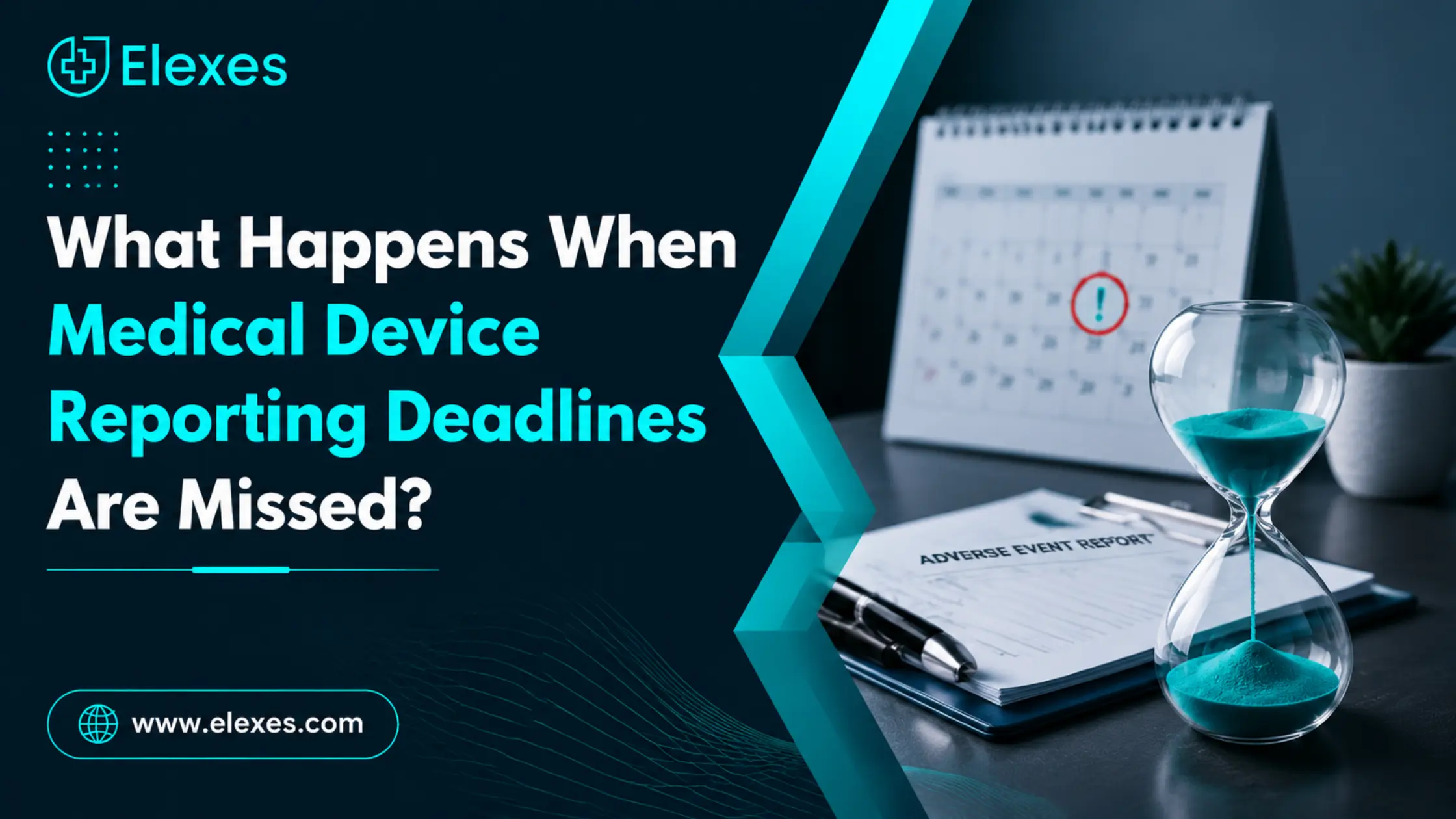
Submission timing depends on the type of report and the circumstances involved. Standard MDR timelines often require prompt action once reportability is known, and certain situations may trigger accelerated reporting obligations. Companies need a disciplined intake, triage, and review process so complaints are assessed quickly, investigations are documented properly, and required reports are prepared before deadlines are missed.
How do complaint handling and adverse event reporting work together?
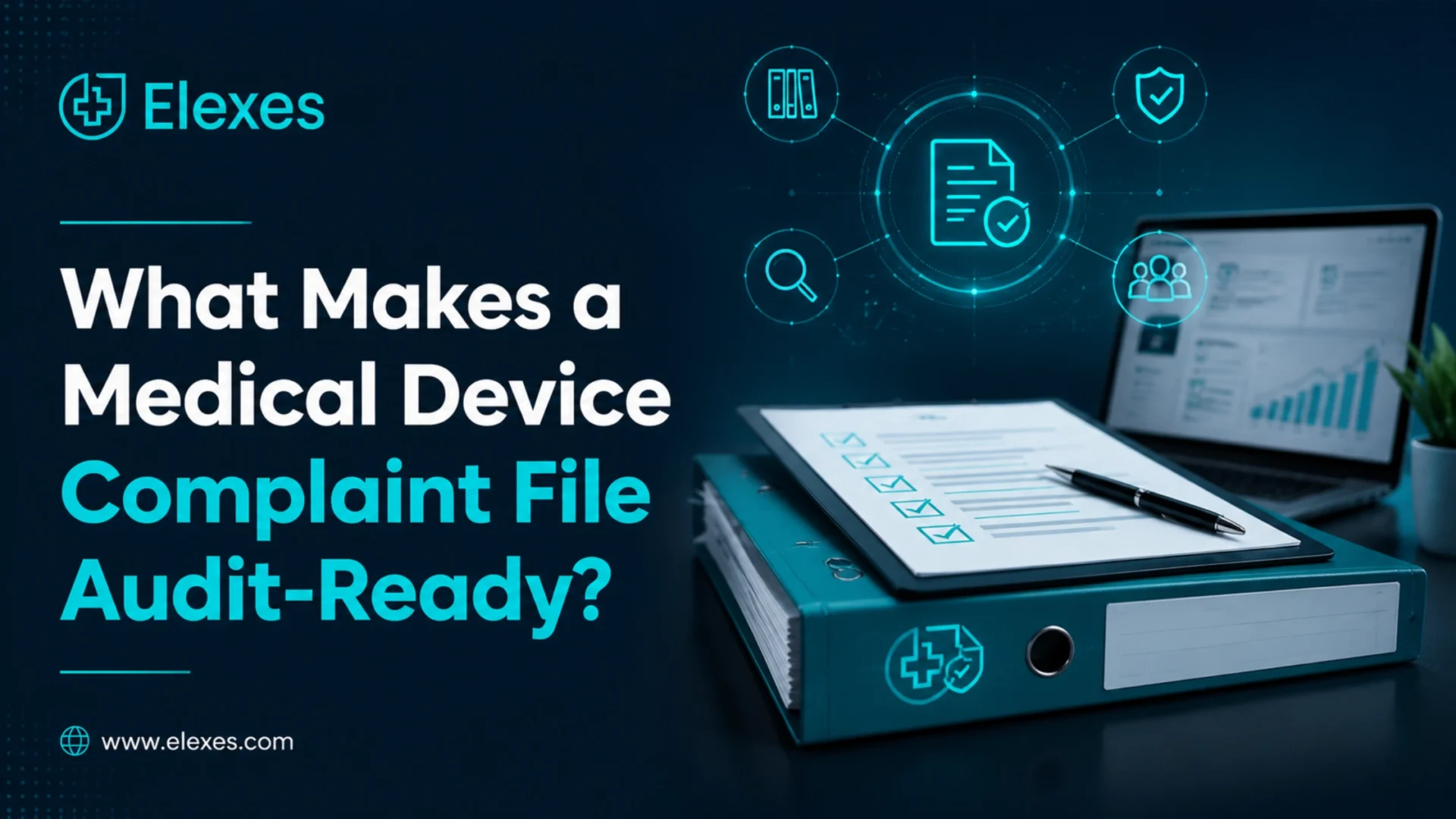
Complaint handling is usually the starting point for adverse event reporting. Incoming complaints must be reviewed, classified, investigated, and evaluated for reportability. A strong complaint system links each case to investigation records, risk management, and post-market surveillance so potential MDR events are not overlooked. FDA inspectors often examine whether complaint files support timely, consistent, and well-documented reporting decisions.
Can Elexes help determine whether an event is reportable?
Yes. Elexes supports structured reportability assessments by reviewing the event details, complaint record, investigation status, and applicable FDA criteria. The team documents the regulatory rationale behind each decision and helps prepare submissions when reporting is required. This approach helps manufacturers improve consistency, reduce uncertainty, and maintain defensible records that stand up to internal review and external inspection.
What documentation should be maintained for adverse event reporting decisions?
Companies should maintain the complaint file, investigation records, device details, event chronology, supporting evidence, reportability assessment, regulatory rationale, and any submitted MDR documentation. Even when an event is determined to be non-reportable, the basis for that decision should be clearly documented. Complete records help demonstrate that the company followed a systematic process rather than making unsupported or inconsistent judgments.
Why do companies outsource FDA adverse event reporting support?
Companies often outsource reporting support to gain specialized regulatory expertise, improve turnaround times, and strengthen documentation quality without expanding internal headcount. External support can be especially valuable when complaint volumes increase, internal teams lack MDR experience, or the organization needs help integrating complaint handling, PMS, and reportability decisions into a more consistent and inspection-ready post-market system.
Still Need Reporting Guidance?
Talk with regulatory experts about your FDA reporting obligations.
Certified & Trusted
Awards and Recognition

ISO 13485
Medical device quality system expertise
MDSAP
Supports multi-market audit readiness
IEC 62304
Software lifecycle compliance knowledge