Navigating the Regulatory Landscape: Challenges and Opportunities for Medical Device and IVD Startups
Regulatory Challenges for Medical Device & IVD Startups – How to Navigate & Succeed
Regulatory Challenges for Medical Device Startups and the IVD Market
For aspiring entrepreneurs venturing into the dynamic world of medical devices and in vitro diagnostics (IVDs), the journey towards bringing innovative healthcare solutions to the market is both exhilarating and challenging. Medical Device Startups, in particular, must navigate the complex and ever-evolving regulatory landscape to ensure their innovations reach patients safely and compliantly.
In this article, we will explore the challenges and opportunities that medical device and IVD startups face while traversing the regulatory pathway.
Elexes has helped 75+ early-stage regulatory planning for MedTech and IVD startups reduce time to approval and meet first funding milestones with compliant strategies. Startups don’t have time for delays. Regulatory clarity is your secret weapon, use it to gain investor trust and accelerate go-to-market.
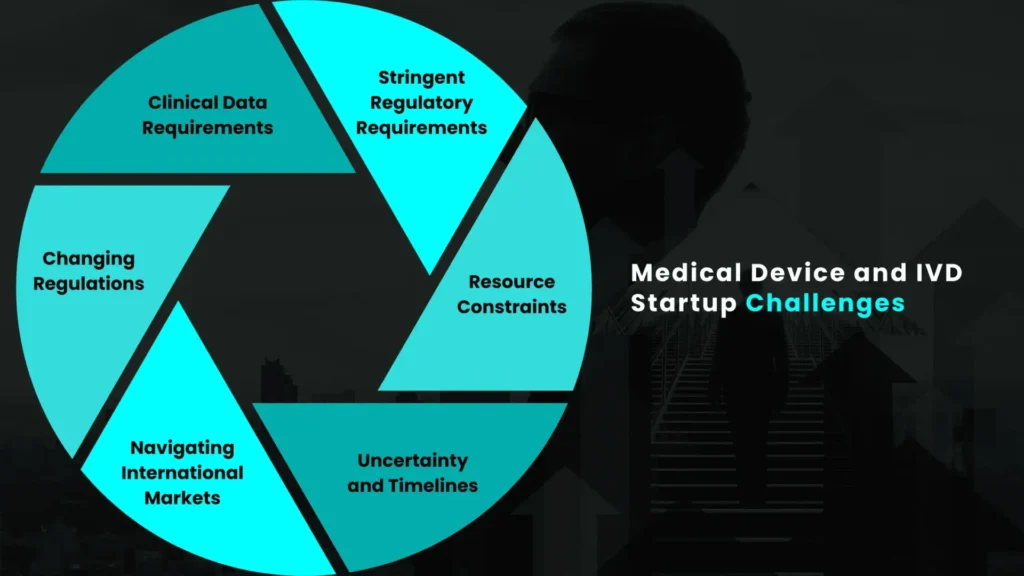
IVD & Medical Device Startup Challenges
1. Stringent Regulatory Requirements:
Startups often encounter stringent regulatory requirements set forth by various governing bodies, such as the U.S. Food and Drug Administration (FDA), Health Canada, and other national health authorities. Complying with these comprehensive regulations can feel overwhelming and time-consuming, demanding scrupulous attention to detail.
2. Resource Constraints:
Startups usually operate with limited resources compared to well-established companies. Navigating the regulatory landscape demands significant financial investment, human capital, and expertise in regulatory affairs, which may stretch the already limited resources of early-stage ventures.
3. Uncertainty and Timelines:
Regulatory approval timelines can be unpredictable, varying from several months to years. The uncertainty surrounding the approval process can hinder product development plans, market entry strategies, and investor confidence.
4. Navigating International Markets:
Expanding to international markets poses additional challenges, as each country may have distinct regulatory requirements. Understanding and complying with multiple regulatory frameworks demand a robust global regulatory strategy.
5. Changing Regulations:
Regulatory policies are not static; they evolve over time to accommodate advancements in technology, safety standards, and public health concerns. Keeping abreast of these changes and adapting quickly can be demanding for startups.
6. Clinical Data Requirements:
Generating sufficient clinical data to support safety and efficacy claims is a significant challenge. Startups often struggle to conduct expensive clinical trials and gather adequate evidence for regulatory submissions.
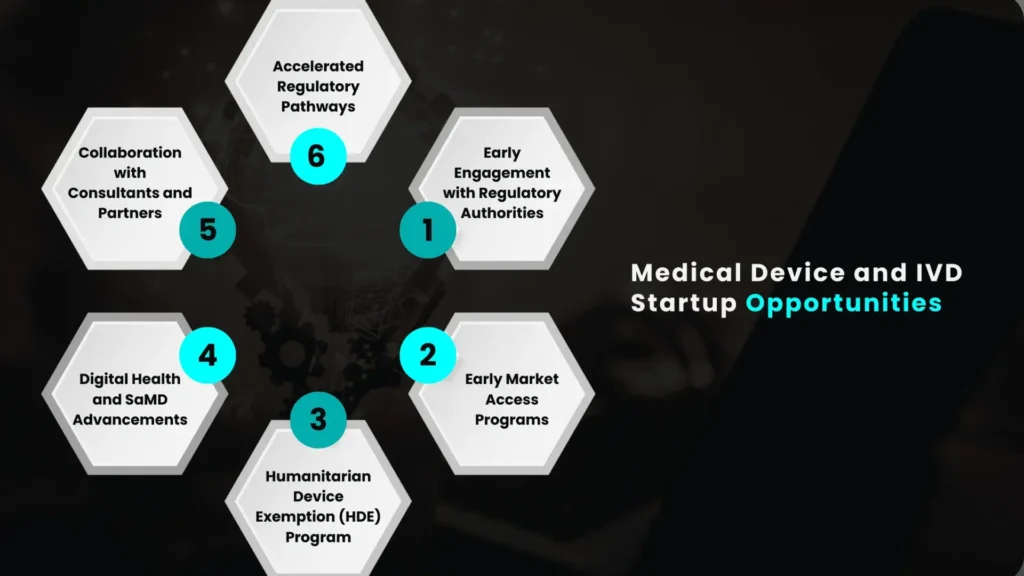
Medical Device Startup Opportunities (IVD Startup)
1. Early Engagement with Regulatory Authorities:
Engaging with regulatory authorities early in the product development process can be advantageous. Seeking pre-submission meetings or scientific advice provides startups with valuable feedback, clarifications on regulatory requirements, and a clearer path to approval.
2. Accelerated Regulatory Pathways:
Some regulatory agencies offer accelerated pathways for innovative and breakthrough technologies. Startups developing novel medical devices or IVDs may be eligible for these expedited pathways, which can significantly shorten approval timelines.
3. Collaboration with Consultants and Partners:
Collaborating with regulatory consultants and experienced partners can help startups navigate the complex regulatory landscape efficiently. These experts offer valuable insights, help optimize regulatory strategies, and ensure compliance with applicable standards.
4. Digital Health and SaMD Advancements:
The emergence of digital health and Software as a Medical Device (SaMD) offers new opportunities for startups. Leveraging digital technologies, startups can develop software-based medical solutions that may have streamlined regulatory pathways.
5. Humanitarian Device Exemption (HDE) Program:
For startups focusing on devices to treat rare conditions, the HDE program in the United States offers an opportunity to gain market approval with less stringent requirements, while still meeting critical unmet medical needs.
6. Early Market Access Programs:
In some regions, startups can leverage early market access programs or compassionate use pathways to provide their products to patients in need before full regulatory approval.
Conclusion:
The regulatory landscape is a pivotal aspect of the medical device and IVD development process, and startups must approach it with preparedness and strategic thinking. While navigating regulatory challenges can be formidable, startups can also find numerous opportunities to expedite approvals, access early markets, and showcase innovative healthcare solutions. Embracing early engagement with regulatory authorities, seeking expert guidance, and capitalizing on advancements in digital health and accelerated pathways can pave the way for successful regulatory approval and market entry. Ultimately, effectively navigating the regulatory landscape empowers medical device and IVD startups to bring their transformative solutions to the forefront of healthcare, benefiting patients and shaping the future of medicine.
What are the biggest regulatory risks for startups?
Misclassification, underestimating documentation requirements, and poor alignment of timelines are common regulatory risks for startups.
How early should I start regulatory planning?
Regulatory planning should begin at the concept or prototype stage to prevent delays, rework, and misalignment with submission requirements.
Can I launch in the US and delay EU compliance?
Yes, many startups begin with FDA 510(k) or De Novo approvals and expand to the EU later, but both regulatory strategies should be planned from the start.
Do startups need a full QMS from the start?
Not necessarily, but a scalable QMS framework aligned with ISO 13485 is essential to ensure audit readiness and support timely market entry.
Can we raise funding without a regulatory plan?
Investors increasingly expect a well-thought-out regulatory roadmap. It shows readiness, reduces risk, and can enhance company valuation.
Elexes medical consulting is one of the leading regulatory & compliance consultant for several industries: Medical device, Pharmaceuticals, Cosmetics, Food, and Biologics.